


River Valley School, a K–6 elementary campus in Calgary, Alberta, faced significant wireless networking challenges that were impacting daily teaching and learning. With over 500 devices in use — including iPads, MacBooks, and Chromebooks — the school's aging Aerohive wireless infrastructure could no longer keep pace with modern educational demands.
A comprehensive pre-installation wireless survey conducted by RIPEDA Consulting revealed critical shortcomings across both floors of the building. The existing deployment of 21 Aerohive access points suffered from widespread coverage gaps, dead zones, and inadequate signal-to-noise ratios in key instructional areas. Throughput issues led to frequent connectivity drops for classroom devices, disrupting lessons and frustrating both educators and students.
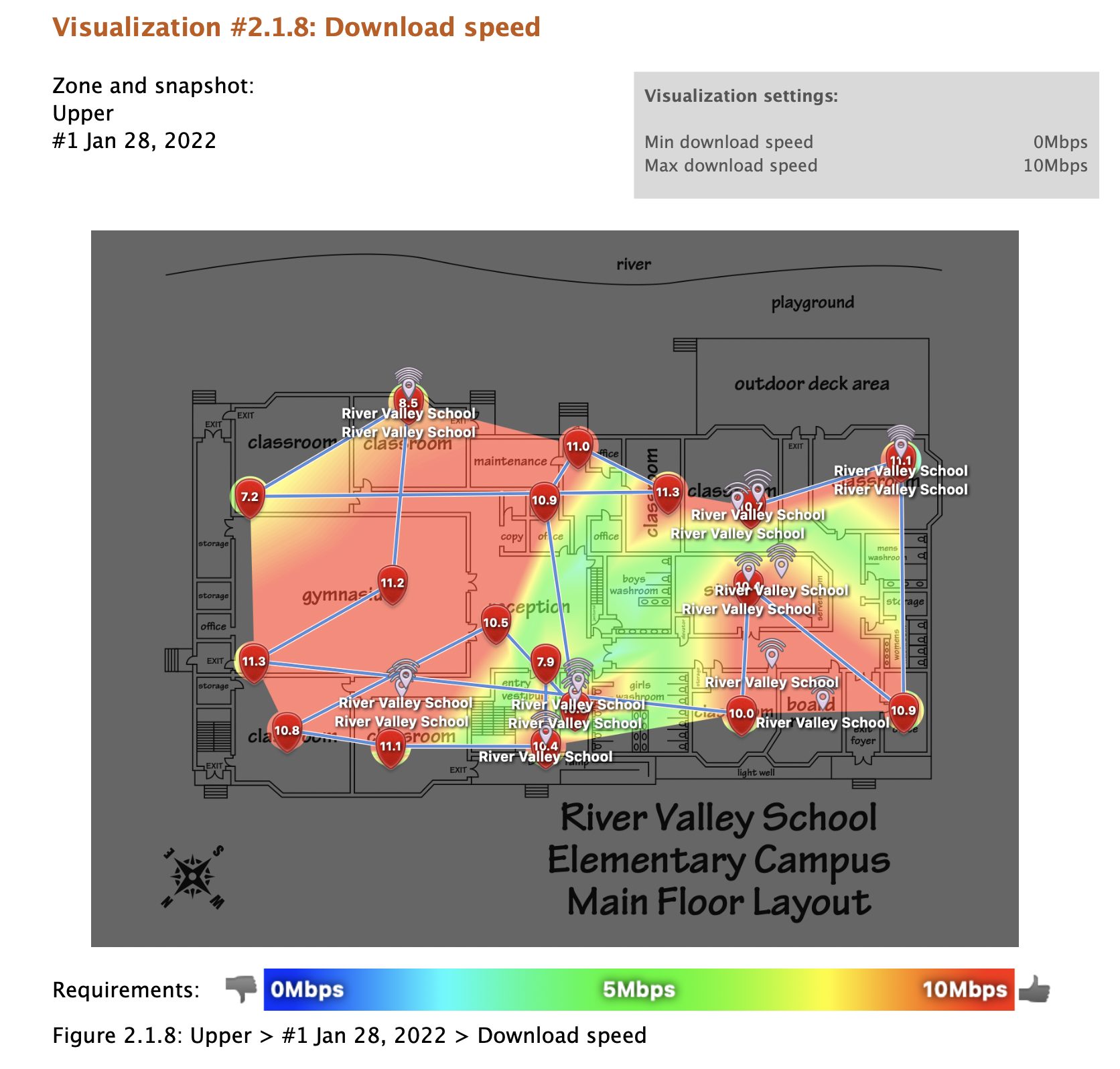
RIPEDA Consulting designed and deployed a complete network transformation for River Valley School, replacing the legacy infrastructure with an enterprise-grade solution.
12 high-performance Ruckus access points with adaptive antenna technology replaced 21 Aerohive units, delivering superior 2.4 GHz and 5 GHz coverage with fewer access points.
Managed PoE switches provide reliable power and connectivity to all access points, with VLAN segmentation and integrated Security Fabric protection.
Unified threat management with advanced content filtering, intrusion prevention, and application control, purpose-built for K–12 educational environments.
RIPEDA's approach followed a proven methodology: a detailed pre-installation wireless survey mapped every coverage gap and interference source, a wireless prediction plan optimized access point placement for maximum efficiency, and a post-installation validation survey confirmed that all performance targets were met or exceeded.
Beyond the technical transformation, RIPEDA Consulting delivered a managed service model that fundamentally changed how River Valley School approaches network infrastructure management.
RIPEDA's post-installation validation survey confirmed dramatic improvements across every measured metric. The heatmaps below are the actual signal data from that survey — green coverage indicates strong, reliable signal levels throughout all instructional areas.
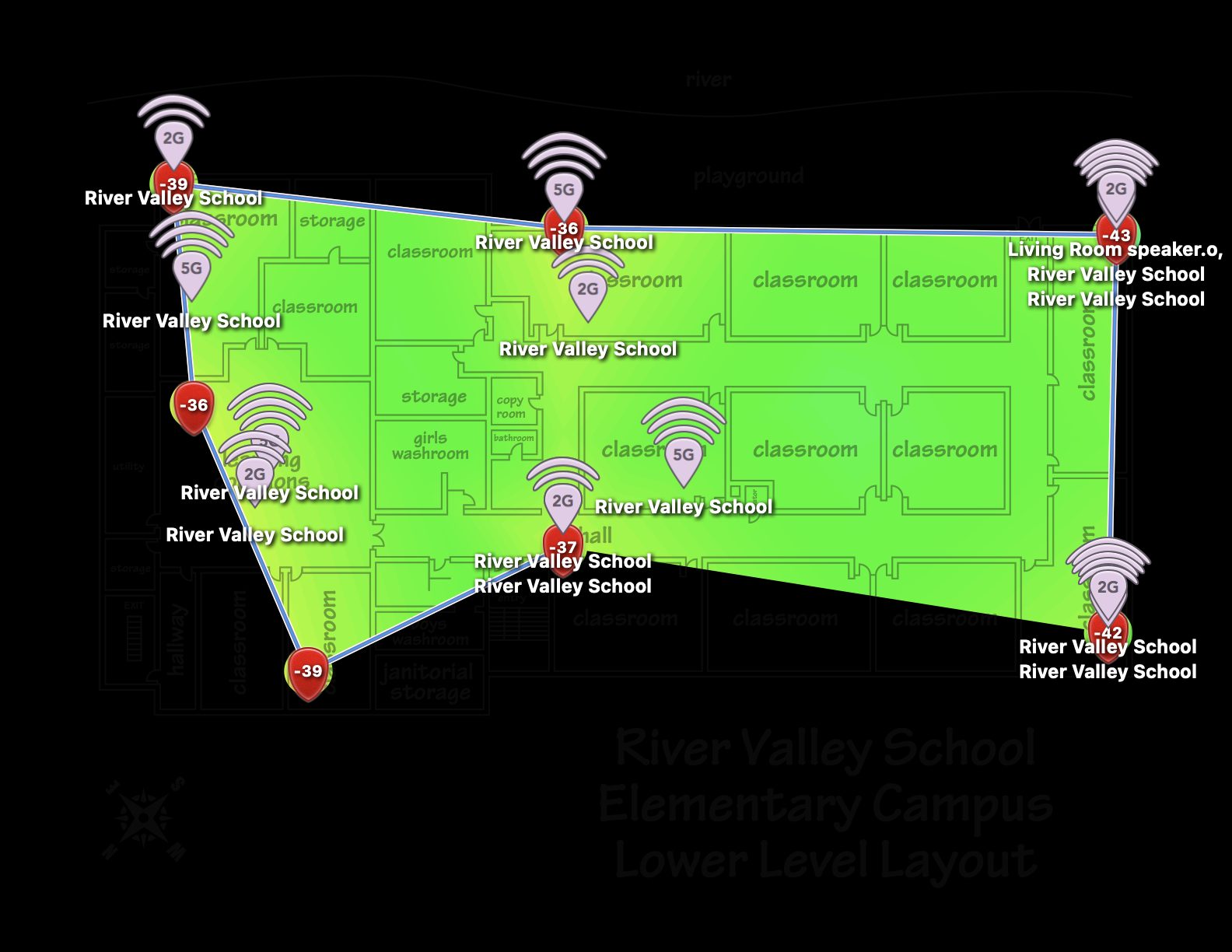
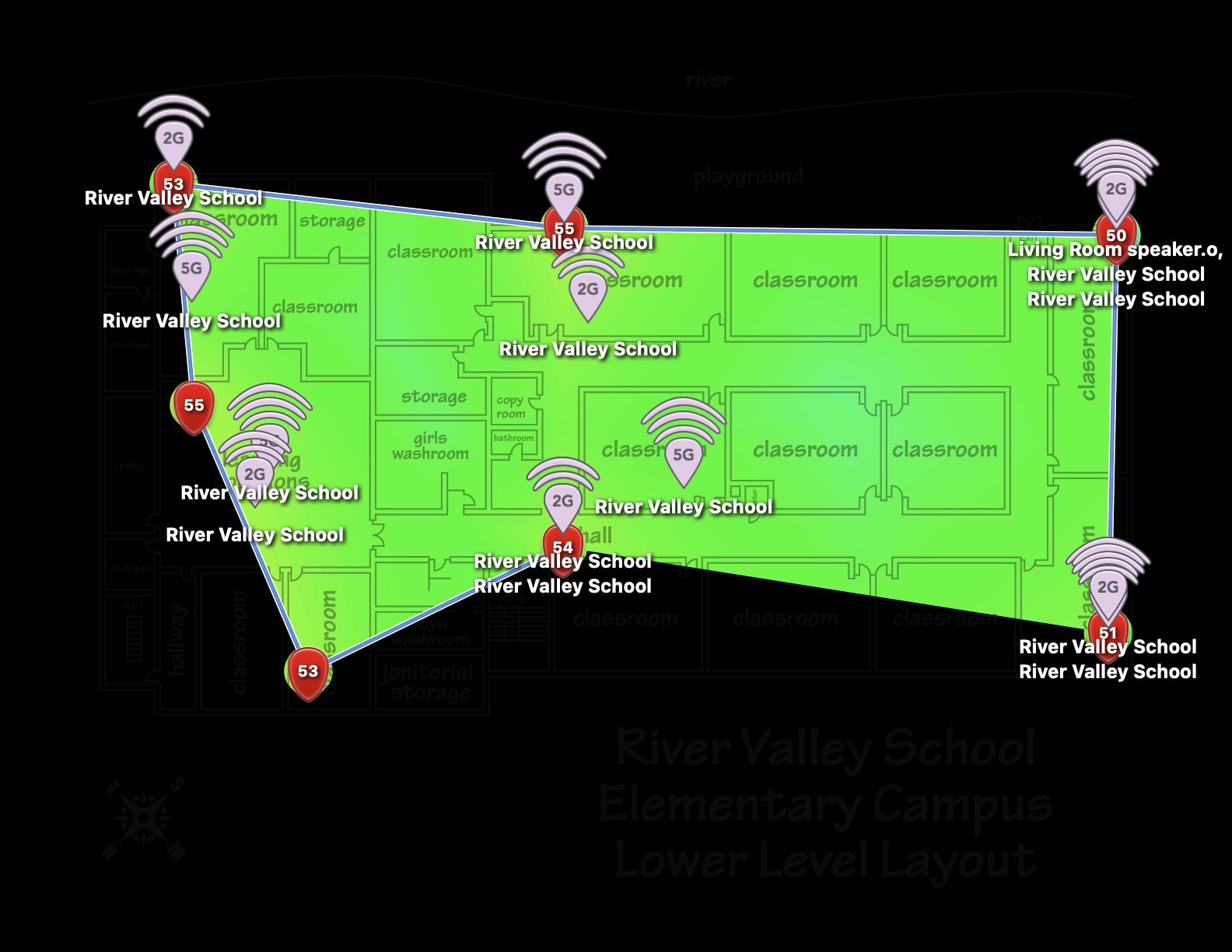
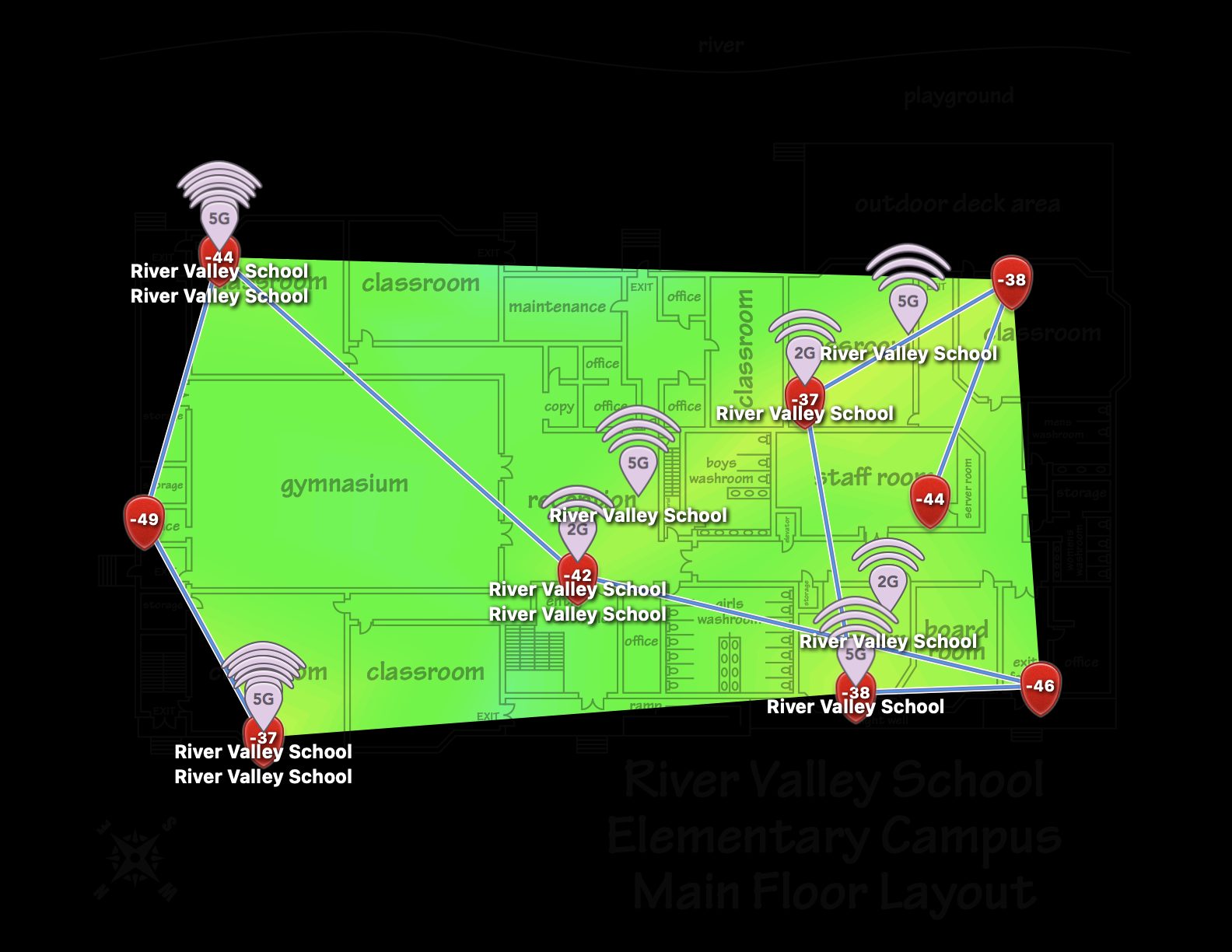
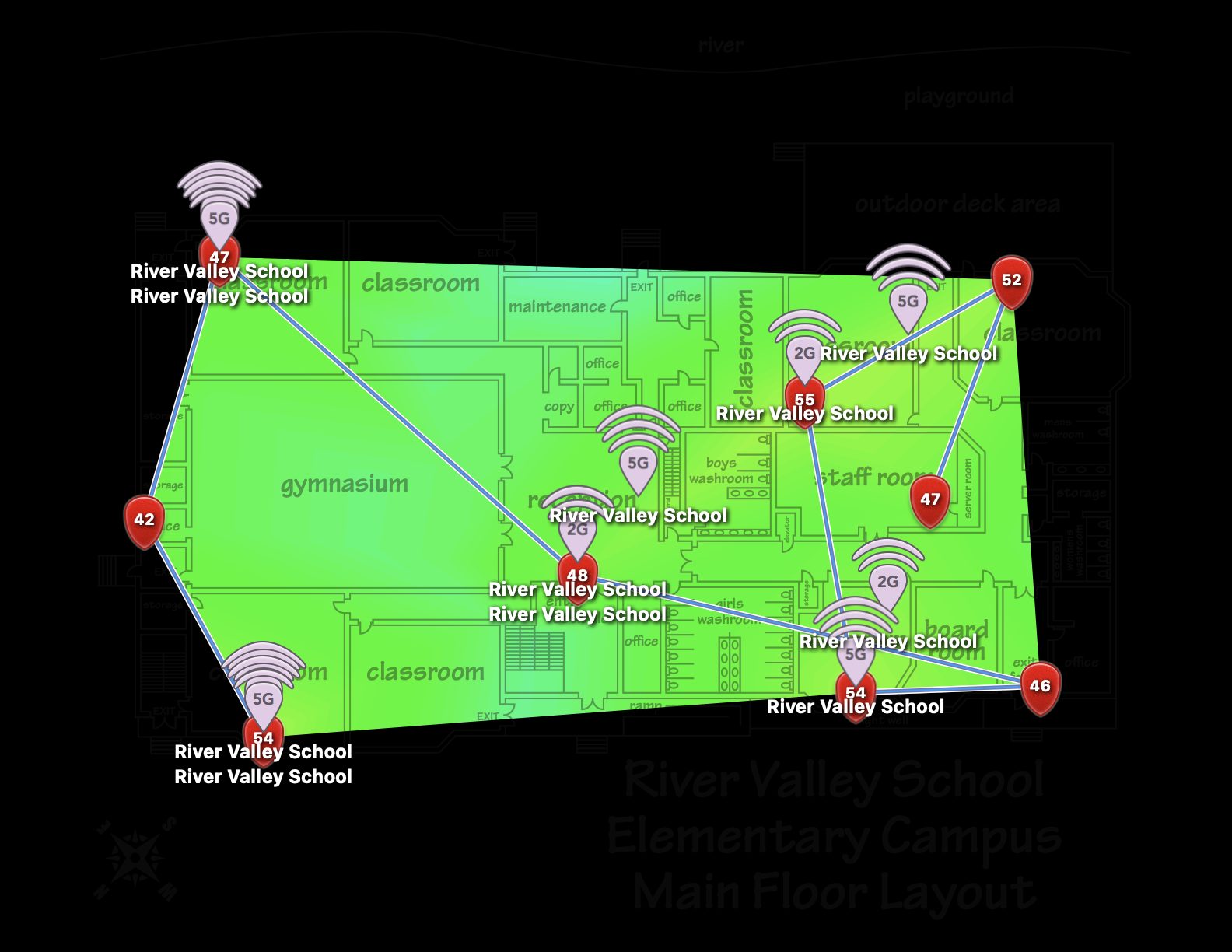
The impact was immediate and transformative. Post-installation validation surveys confirmed complete elimination of Wi-Fi dead zones across both floors of the school. Wireless quality improved dramatically, with readings of 42–55 dB measured throughout all instructional areas — well above the threshold for reliable, high-performance wireless connectivity.
| Metric | Before | After |
|---|---|---|
| Access points | 21 Aerohive units | 12 Ruckus APs |
| Wi-Fi dead zones | Numerous, across both floors | Completely eliminated |
| SNR performance | Poor / inconsistent | 42–55 dB (excellent) |
| Device support | Unreliable for 500+ devices | Seamless for all devices |
| Frequency bands | Limited 2.4 GHz / 5 GHz | Full dual-band optimization |
| Network security | Basic wireless security | FortiGate UTM + Security Fabric |
“With fewer access points delivering significantly better coverage, Ruckus and RIPEDA proved that smarter technology design always outperforms simply adding more hardware.”